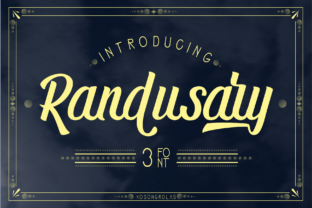
Randusary: A Versatile Font Family for Handmade Product Design
It was one of those late-night label-testing sessions that every handmade seller knows well. I had just finished a new batch of soy candles—cedar and vanilla, my autumn bestseller—and I was holding a tentative proof of the label. The layout was solid, the kraft paper stock felt just right, but the typeface? It was doing nothing. It sat there, flat and forgettable. I needed a font that would whisper warmth and character without shouting. I needed a font that felt like it belonged on a candle that was meant to be lit during quiet evenings. That is when I pulled up the Randusary font family for the first time.
What Makes Randusary Stand Out
Randusary is not a single font. It is a modern family of three distinct styles: a script version, a sans version, and a monoline version. Each one carries its own personality, yet they all share a cohesive visual language that makes them work beautifully together. The script version has a flowing, hand-drawn feel that adds warmth to any project. The sans version brings clean, contemporary structure. The monoline version sits somewhere in between—effortless and airy, perfect for when you want subtle elegance without too much weight.
What I love most is that each version has its own uniqueness. You can use them separately for distinct projects or combine them within a single design to create layered, interesting layouts. The family gives you the opportunity to keep creating unique designs without ever feeling like you are repeating yourself. As a maker who produces labels, greeting cards, and seasonal printables, that kind of versatility is gold.
Bringing Randusary to Life on Handmade Products
The first real test for Randusary was those candle labels I mentioned. I used the script version for the candle name—Autumn Ember—and paired it with the sans version for the scent notes and burn time. The result was instant. The script gave the label a handmade, artisanal feel, while the sans kept the practical information clean and readable. The label suddenly looked like it belonged on a boutique shelf, not just a kitchen counter experiment.
From there, I moved on to greeting cards. I design a small line of birthday and encouragement cards for my Etsy shop, and I am always looking for a font that can carry a short message without feeling stiff. The monoline version of Randusary turned out to be perfect for titles like You Are Loved or Happy Birthday. The letterforms are light and airy, yet substantial enough to hold their own on a 5x7 card. For the inside message, I dropped down to the sans version, which kept the tone warm but legible.
Why Randusary Works for Short Phrases and Display Text
One thing I have learned as a printable creator is that not every font is suited for every job. Randusary is at its best when used for short phrases, names, titles, decorative wording, and display applications. The script and monoline versions, in particular, have a handcrafted rhythm that shines in two- to five-word layouts. I have used the script version for wedding welcome signs, farmhouse-style wall art, and boutique packaging tags. Each time, the font adds an emotional layer that a standard serif or sans simply cannot match.
The sans version is more versatile for longer text, especially when you need to maintain readability at smaller sizes. I have used it for product description cards, ingredient lists on bath product labels, and smaller text on planner pages. It holds up well even at 10 or 12 points, which is critical when you are printing on physical merchandise and need every word to be crisp.
Practical Readability for Cutting Machines and Small Stickers
If you use a Cricut or Silhouette, you already know that not every font cuts cleanly. Thin strokes can break, intricate loops can turn into a tangled mess, and delicate scripts can lose their shape once transferred onto vinyl. I tested Randusary on a small sticker sheet—lavender bath salts labels, about 1.5 inches wide—and I was genuinely impressed. The monoline version cut smoothly with no breakage. The script version required a slightly slower cut speed on the thinner flourishes, but the results were clean and professional.
For small stickers and product tags, I recommend using the sans or monoline version at 14 points or larger. The script version works best at 18 points or above for physical cuts. If you are designing listing images or digital mockups, you can go smaller, but for physical merchandise, larger sizes will save you from weeding frustration. I also suggest testing a single cut on scrap vinyl before committing to a full batch. A little testing goes a long way when you are producing items for paying customers.
Font Pairing Ideas That Work with Randusary
Because Randusary already contains three styles within one family, you may not need to look far for a pairing partner. However, I have found that adding a clean sans serif font like Lato or Montserrat as a supporting typeface gives even more flexibility. The neutral sans sits quietly behind Randusary’s more expressive script or monoline, handling small print and secondary information without competing for attention.
If you prefer a more minimalist look, a simple serif font like Playfair Display or Cormorant Garamond pairs beautifully with the monoline version of Randusary. The contrast between the structured serif and the airy monoline creates a sophisticated tension that works well for wedding stationery, boutique branding, and printable wall art. For a more playful, handmade vibe, try pairing the script version with a quirky handwritten font for secondary accents. The key is to let Randusary lead the design and keep the supporting font simple.
Seasonal and Holiday Craft Applications
Randusary has become my go-to for seasonal designs. Last Christmas, I used the script version for a set of holiday gift tags. Words like Joy, Peace, and Noel looked beautifully hand-lettered without me having to draw a single stroke. The monoline version worked well for longer phrases like Merry Christmas from our home to yours on a chalkboard-style sign. For Valentine's Day, the script version carried heartwarming messages on mini cards and treat bag toppers.
If you create digital templates or printable wall art for different seasons, Randusary gives you a consistent brand voice while allowing you to switch styles depending on the mood of the design. That kind of flexibility means you can build a cohesive shop aesthetic without buying a new font for every holiday.
Checking What You Get Before You Sell
Before you start selling physical products or digital downloads using Randusary, take a moment to check what is included in the font package. Look for style availability: does it include the script, sans, and monoline versions? Are there alternates, ligatures, or swashes? These extras can elevate a simple design into something truly custom. I always open the full character map in my design software to see which alternate glyphs are available. Sometimes a single alternate letter can transform a logo from ordinary to memorable.
Also check the file formats. Most font packages include OTF and TTF files, which work across PC and Mac. If you own a cutting machine, TTF files are your safest bet. Multilingual support is another consideration if you sell to international customers. Randusary covers a solid range of Latin-based languages, which is sufficient for most English-language shops, but it is worth verifying if your audience requires accented characters or extended glyphs.
Commercial Licensing for Your Shop
This is the part that every seller needs to take seriously. When you use Randusary for handmade labels, packaging, stickers, greeting cards, mugs, shirts, tote bags, signs, or any physical merchandise, you need a commercial font license. The same applies if you sell digital templates, printables, or SVG-style design files. Always read the license agreement carefully. Some font licenses cover a single user, while others cover a team or a certain number of products sold. If you plan to use Randusary across multiple product lines or shops, confirm that the license allows for that scope.
I learned this lesson early in my shop journey when I used a font that I thought was free for commercial use—only to discover later that it was not. The headache of retroactively licensing a font or replacing it across dozens of listings is not worth it. Randusary is a premium font, and investing in the proper commercial license protects your business and respects the work of the type designer. It also gives you the confidence to scale your production without worrying about legal issues down the road.
Using Randusary for Brand Identity and Customer Recognition
If you are building a handmade brand, consistency is key. Using the same font family across your product labels, packaging, social media graphics, and shop banner creates a cohesive visual identity that customers will start to recognize. Randusary’s three styles allow you to switch between contexts—script for emotional headlines, sans for practical information, monoline for accent details—while maintaining a unified brand voice. That kind of recognition builds trust and makes your products feel more professional.
I have noticed that customers respond to fonts that feel intentional. When I switched one of my product lines to Randusary, the perceived quality of the packaging seemed to improve. The labels looked more considered. The cards felt more personal. The wall art read as designer-level rather than DIY. A good font does not just dress up your product—it communicates that you care about the details.
Final Thoughts on Making with Randusary
Whether you are printing candle labels at midnight, cutting vinyl for a weekend market, or designing digital templates for a global audience, the font you choose matters. Randusary offers a rare combination of warmth, versatility, and practicality that makes it a solid investment for any crafter or handmade seller. The three styles give you room to explore and experiment, while the cohesive family ensures that everything you make still feels like you.
So the next time you are staring at a blank label or a stubborn mockup, pull up Randusary. Test the script on a wedding invitation. Try the monoline on a tote bag. Use the sans for your shop branding. You might find, as I did, that the right font can turn a simple product into something your customers will reach for again and again.