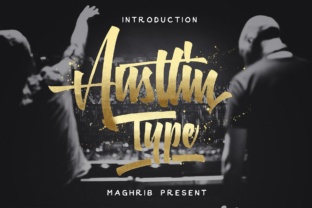
Austtin: A Striking Typeface That Gives Your Small Business a Distinct Voice
When you run a small business, every visual choice you make sends a message to your customers. Your logo, your product labels, your social media graphics, and even your business cards all work together to tell people who you are. The fonts you choose are a huge part of that story. Austtin is a striking typeface that can help you create a stunning, custom look for your brand without needing a design degree or an expensive agency. Let me walk you through how this font can transform your everyday business materials and help you build a brand that people remember.
What Makes Austtin Different from Everyday Fonts
Austtin belongs to the Script Amp category of fonts, which means it carries an expressive, handcrafted personality. This is not a quiet, generic typeface that blends into the background. It is a display font with character, movement, and a sense of elegance. When you see Austtin on a product label or a website banner, you notice it. It feels deliberate and intentional, like someone took the time to write each letter with care. For a small business owner, that kind of visual presence is gold. It signals to your customers that you pay attention to details and that your brand has a point of view.
The mood of Austtin is refined yet approachable. It has a modern script quality that feels both classic and fresh. It is not overly casual like a messy handwritten font, and it is not stiff like a traditional formal script. It sits somewhere in the middle, making it versatile enough for a wide range of businesses. Whether you run a boutique bakery, a handmade candle shop, a beauty product line, a coaching practice, or a neighborhood café, Austtin can bring a layer of sophistication to your brand identity without making it feel cold or corporate.
Using Austtin in Real Business Materials
The real value of any font lies in how it performs across the materials your customers actually see. Let me give you some practical examples of where Austtin shines in a small business context.
Logos and Business Cards
Your logo is the face of your brand. If you are using a generic system font or a free script that lacks personality, your logo will look like everyone else’s. Austtin gives you a distinct wordmark that feels custom. Imagine a beauty brand called "Luma" set in Austtin. The flowing letters convey softness and quality. On a business card, that same logo becomes a conversation starter. People notice when a card looks well-designed. Austtin works beautifully as the primary logo font because it has enough weight and presence to stand alone. You do not need a lot of extra ornamentation. The typeface itself does the work.
Product Labels and Packaging Design
If you sell physical products, your packaging is your silent salesperson. Whether it is a candle jar, a soap box, a coffee bag, or a skincare bottle, the label is often the first thing a customer touches. Austtin is large enough and clear enough to work on small labels, which is a common challenge with script fonts. Many scripts get muddy or hard to read when printed at two inches wide. Austtin maintains its readability because the letterforms are designed with generous spacing and clear shapes. For a handmade candle brand, a simple label with the product name in Austtin and a clean sans serif for the scent description can look incredibly premium. It elevates the perception of your product without requiring expensive packaging materials.
Thank-You Cards, Stickers, and Inserts
Small touches build customer loyalty. A thank-you card or a branded sticker included in an online order makes a lasting impression. Austtin works perfectly for these smaller pieces because it adds a handwritten, personal feel. Your customers will feel like they received something thoughtful, not mass-produced. For sticker sheets or packaging inserts, use Austtin for the main greeting or brand name, and pair it with a simpler font for additional details. This combination feels curated and intentional.
Menus, Flyers, and In-Store Signage
For café owners or boutique shops, menus and signage are critical. Austtin can be used for the header items, such as the name of your shop or the category titles on a menu. On a chalkboard-style menu or a printed flyer, Austtin draws the eye and sets a warm, inviting tone. It works particularly well for specialty items, signature drinks, or featured products. For body text on a menu, you will want to use a more readable font, but Austtin as a display font for headings gives the menu structure and personality.
How Austtin Helps You Look Professional and Trustworthy
Consistency is one of the hardest things for a small business to achieve, especially when you are handling everything yourself. When you use a single typeface like Austtin across multiple touchpoints, your brand starts to feel cohesive. That consistency builds recognition. Customers who see your Instagram post, then visit your website, then receive a package with a matching label will subconsciously trust you more. They will perceive your business as established and reliable. A font like Austtin gives you a shortcut to that professional look because it is distinctive enough to be memorable yet versatile enough to work in many places.
When to Use Austtin as a Headline, Logo, or Accent Font
Austtin is primarily a display font. That means it is best used for short, impactful text. Use it for your logo, your main product names, your website headlines, your Instagram quote graphics, and your email header images. It is not designed for long paragraphs or small body copy. If you try to set a whole paragraph in Austtin, it will lose its impact and become harder to read. The key is to use it strategically. Let Austtin be the star of your visual hierarchy, and support it with a clean, neutral font for the rest of your text.
Readability in Real Business Settings
One concern business owners often have about script fonts is whether customers will actually be able to read them. This is a valid concern, especially for small labels, mobile screens, and social media thumbnails. Austtin handles these scenarios well because the letterforms are not overly condensed or ornamental. They are expressive but legible. When I tested Austtin on a mock business card and a product label, the name was clear even at smaller sizes. For mobile screens, such as Instagram story text or a website hero banner, Austtin reads cleanly as long as you give it enough space and avoid placing it over busy backgrounds. Always test your designs on an actual phone screen before finalizing them, and adjust the size and contrast accordingly.
Simple Font Pairing Ideas for a Complete Brand Look
No font works in isolation. To build a complete brand identity, you will want to pair Austtin with a complementary typeface. Because Austtin has a decorative script quality, it pairs best with a clean, neutral font that does not compete for attention. A simple sans serif font, like a basic geometric sans or a classic humanist sans, works well. The sans serif provides readability for body text, product descriptions, menu items, and website paragraphs while Austtin handles the headlines. Alternatively, you can pair Austtin with a refined serif font if you want a more traditional or editorial feel. For example, a light serif for body copy combined with Austtin for headings creates a sophisticated contrast that works well for beauty products, stationery brands, and lifestyle blogs. The goal is balance. Let Austtin be the expressive element and let the supporting font be the workhorse.
Testing Austtin Before Committing to Your Entire Brand
Before you apply Austtin to every piece of your brand, take the time to test it in a few real-world scenarios. Create a mock logo, print a sample label, and design a social media graphic. See how it looks in different sizes, on different backgrounds, and in both print and digital formats. Show it to a few trusted customers or friends and ask for their honest reaction. Does it feel aligned with your brand personality? Does it evoke the emotions you want? This testing phase is inexpensive and can save you from investing in packaging or signage that does not feel right. A font can change the entire tone of a brand, so it is worth getting it right from the beginning.
Commercial Font Licensing and What You Need to Know
As a business owner, you need to be careful about font licensing. Not all fonts are free to use on products, packaging, templates, merchandise, or client work. When you choose Austtin, make sure you purchase a commercial license that covers your specific use case. If you are using the font for your own brand materials, such as logos, labels, and website headers, standard commercial licensing typically applies. If you plan to sell products with the font embedded, such as digital templates or printable designs for clients, you may need an extended license. Always read the license terms provided by Script Amp or the font retailer before you start using the font in your business. This protects you legally and ensures that the designer is compensated fairly for their work.
Why Austtin Belongs in Your Design Toolkit
Running a small business means you have to wear many hats. You are the designer, the marketer, the customer service team, and the shipping department all at once. Having a font like Austtin in your toolkit simplifies the design part of your job. It gives you a professional, distinctive typeface that you can reach for again and again. Whether you are creating a new product line, updating your website, or designing a seasonal promotion, Austtin provides a consistent visual thread that ties everything together. It helps you look like a brand that has its act together, even when you are working with a limited budget and a tight schedule.
If you are ready to move beyond generic fonts and give your business a more intentional look, Austtin is a smart choice. It is a premium font that offers real value for entrepreneurs who care about how they present themselves to the world. Try it on a few projects, see how it feels, and let your customers respond. The right typeface can make all the difference in how your brand is perceived.